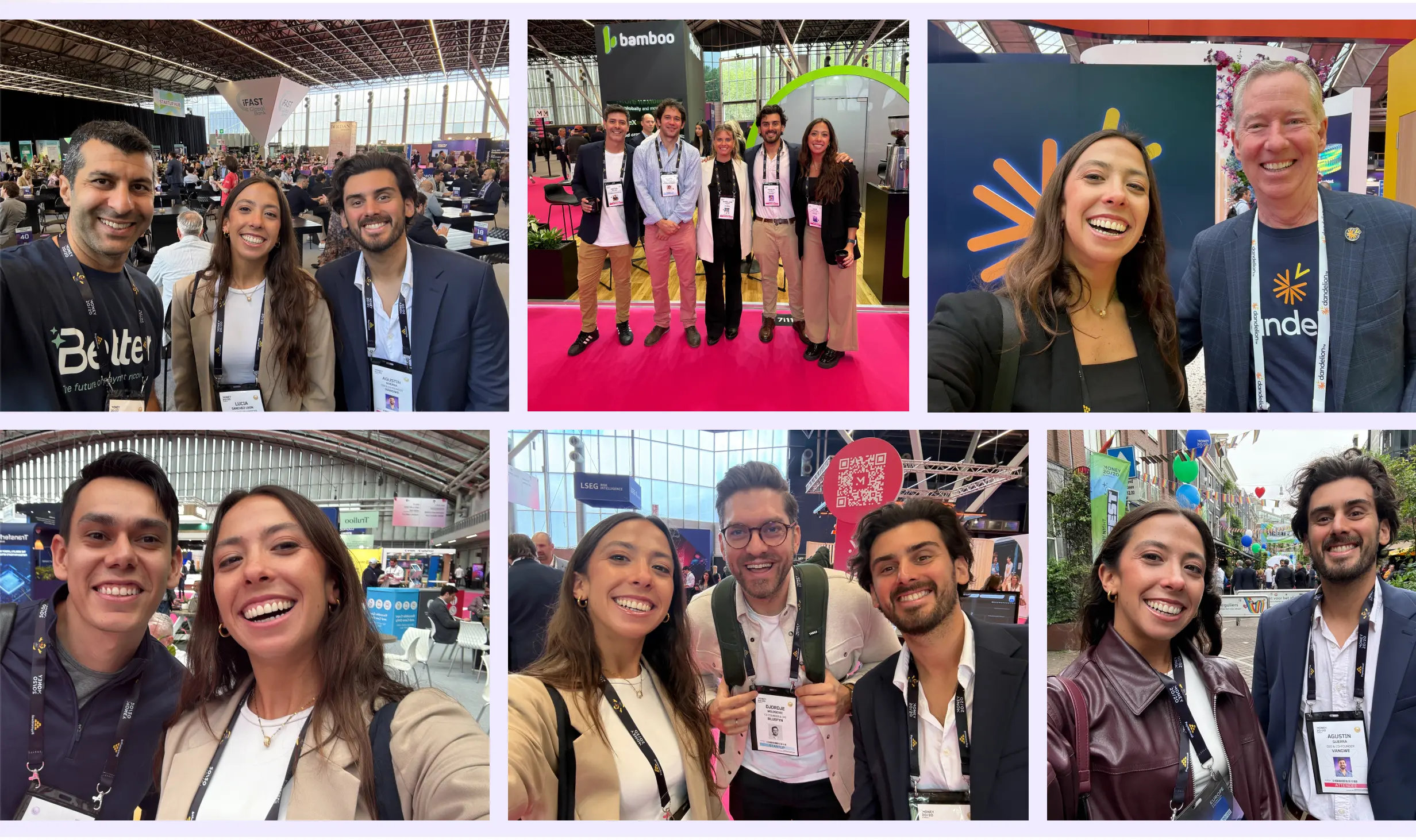

It's my first Money20/20 Amsterdam, and I needed to write a blog about it. The truth is, with keynotes, talks, panels, the Connection Lounge, and a dozen other things happening at the same time, it was almost impossible to keep track of everything. I wouldn't have minded borrowing Hermione Granger's time-turner just to be able to see it all.
Still, I managed to attend quite a bit, meet a lot of new people from the industry, reconnect with clients and partners, and make the most of the three days at RAI.
After every conference I go to, I try to take notes and put together a summary of the main topics, challenges, and conversations I picked up along the way. It's easy to forget how much the industry shifts from one event to the next, and these notes help me step back and see the bigger picture.
So here are some of them.
The LATAM presence was hard to miss
One of my personal highlights from the trip was seeing so many familiar faces from Latin America with a real presence on the show floor.
Our client Bamboo Payment Systems had a large booth alongside StoneX, and it was great to see them there. We've worked together for years, so seeing them represented at one of the biggest events in the industry felt special.
dLocal, one of our strategic partners and a company that's also part of Vangwe's story in payments, was another of the names that stood out. Our CEO spent years there before founding Vangwe, and a big part of why we ended up specializing in payments can be traced back to those roots. Seeing them at Money20/20 always feels a bit like seeing family.
Maybe it's because we're Uruguayan, but seeing companies like dLocal and Transactility flying the flag in Amsterdam made me feel proud. It's a reminder that Latin America isn't sitting on the sidelines of the payments industry. It's very much part of it.

Agentic commerce: what happens when AI starts paying?
If there was one topic that seemed impossible to avoid this year, it was agentic commerce.
The conversation is no longer about whether AI can help consumers discover products, compare options, or navigate a checkout. It's about what happens when AI starts acting on behalf of users and actually initiates transactions.
That raises a completely different set of questions. How do you handle consent? Who is responsible when something goes wrong? How much autonomy should an AI agent have when money is involved?
At the same time, AI is reshaping fraud prevention just as quickly as it's creating new fraud vectors. Across conversations, sessions, and product demos, there was a clear sense that payments companies are entering a new phase where AI isn't just optimizing processes in the background. It's becoming an active participant in the transaction itself.
In payments, trust is still the product
One topic that kept resurfacing throughout the event was trust.
Payments companies spend a lot of time talking about technology, infrastructure, orchestration, and innovation, but most customers are evaluating something much simpler: do I trust this company with my money?
That's why communication matters so much when things go wrong. Staying silent rarely helps. The companies that tend to navigate difficult situations best are usually the ones that communicate clearly, explain what's happening, and maintain a human voice throughout the process.
It also feels like authenticity is becoming more important, not less. As AI makes it easier to generate endless amounts of polished content, genuine communication becomes easier to recognize and, ultimately, more valuable.
At the end of the day, customers don't need to understand the infrastructure behind a payment. They just need to trust that their money is safe and that it will arrive where it's supposed to.
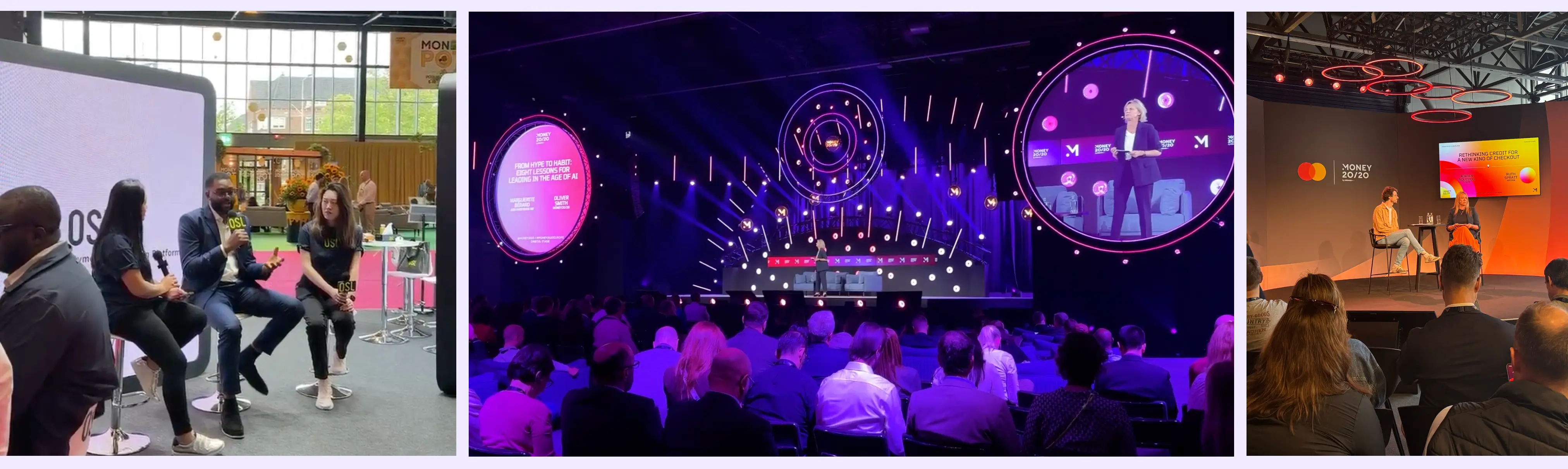
The Stablecoin conversation has shifted
Stablecoins were one of the most discussed topics throughout the event, but the conversation felt different from previous years.
The focus wasn't on whether the technology works or whether stablecoins are here to stay. The discussion has largely moved beyond that.
What came up repeatedly was access.
For many workers and businesses around the world, moving money isn't necessarily the biggest challenge. Accessing and holding value in a stable currency can be.
That's where stablecoins continue to attract attention, particularly in markets where currency volatility, conversion costs, or limited access to dollar-denominated products create friction.
There are still significant challenges around regulation, user experience, and adoption, but it feels like the industry is becoming much more concrete about the problems stablecoins are actually trying to solve.

Compliance is becoming a competitive advantage
Another shift that stood out was how companies are talking about regulation.
A few years ago, compliance conversations often felt defensive. Today, many companies seem to be treating regulation as part of their competitive strategy.
The thinking is relatively simple: if regulatory requirements continue to increase, the companies that invest early in compliance, licensing, and governance create barriers that are harder for competitors to overcome.
Regulation is still challenging, but the conversation feels increasingly focused on how to use it as an advantage rather than simply how to survive it.

What startups are betting on
Walking through the Startup Hub is always one of the easiest ways to understand where the industry's attention is moving.
This year, I noticed a lot of companies focused on fraud prevention, identity, AI-powered risk management, embedded financial products, and tools designed for very specific market problems.
What stood out wasn't a single company or product. It was how targeted many of the solutions felt.
Instead of trying to build broad platforms that solve everything, many founders seem to be focusing on very specific pain points and building deeply around them.
It feels like fintech innovation is becoming more specialized as the problems themselves become more complex.
My final thoughts
I don't always get to spend as much time in the sessions as I'd like, the reality is that most of my time at events like this is spent meeting people, talking to clients and partners, and building connections across the industry. But honestly, that's also where a lot of the learning happens.
Some of the most valuable insights came from those conversations rather than the stages. Hearing the same themes come up repeatedly, but from completely different angles, is usually what makes things click.
I'm heading home with new ideas, new contacts, and a clearer sense of where the industry's attention is right now.
Now let's see how many of these notes still hold up by next year.