

In fintech, we love to talk about speed. Instant payments, one-click checkout, same-day settlements, and, of course, "seamless merchant onboarding."
But when it comes to merchant onboarding, chasing total frictionlessness can sometimes do more harm than good. Because the truth is: not all friction is bad.
Why we got obsessed with speed
For years, PSPs, PayFacs and fintech platforms have been under pressure to activate merchants faster. The logic made sense: faster onboarding means more merchants processing transactions, which means more revenue.
But somewhere along the way, "fast" became the only goal. Compliance KYC, and KYB were seen as blockers, something to automate away rather than understand. And that's when the cracks started to show.
Friction that protects
When a merchant is onboarded, we're not just collecting a few documents. We're verifying business identity, merchant risk, and money flow patterns.
A few minutes of friction, say, an extra verification check, a document review, or a flagged risk score, can prevent days of operational headaches later.
It's friction that protects you from onboarding a shell company, a high-risk merchant, or someone whose business doesn't align with your risk appetite.
The goal isn't to eliminate friction. It's to design the right kind of friction: smart onboarding, data-driven risk assessments, and proportional compliance workflows.
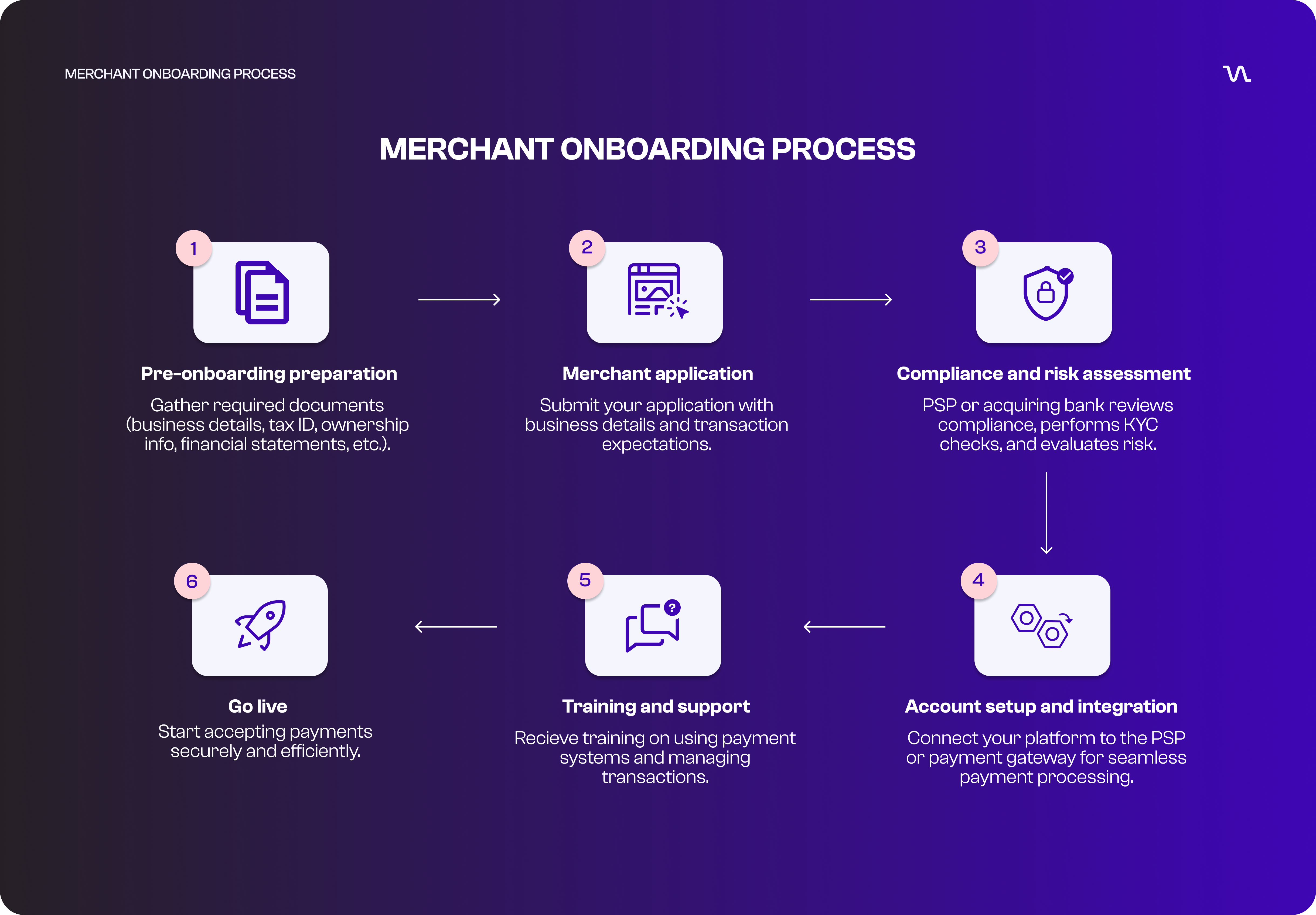
Merchant Process Onboarding
The shift to smart onboarding
What's changing now is how fintechs approach this balance. Instead of adding manual layers, they're adopting risk-based and automated onboarding models that adapt in real time.
• Low-risk merchants? Instant onboarding with automated KYB.
• High-risk or complex structures? Escalate to enhanced due diligence.
• Global merchants? Apply local compliance logic dynamically.
This is where AI onboardings and RegTech integrations are really moving the needle. APIs now connect to dozens of data sources for business identity verification, UBO checks, sanctions screening, and transaction monitoring, all running silently in the background without overwhelming the ops teams in manual reviews.
What the best fintechs are doing
The most forward-thinking PSPs and PayFacs aren't just automating onboarding. They're reimagining it as part of the merchant experience.
They track onboarding-to-activation time as a growth KPI. They run A/B tests on the onboarding flow. They use machine learning for merchant risk scoring before they hit "apply."
And perhaps most importantly, they see compliance as a competitive advantage, not a cost center.

The future: embedded compliance
The next big shift will be embedded compliance, where KYC/KYB isn't a separate step but an invisible layer built into the infrastructure.
Imagine a world where merchants are continuously verified as they grow, pivot, or expand into new markets, without submitting new documents every six months.
That's where fintech is headed: continuous verification and real-time trust, not one-time checks.
We're making it happen at Vangwe
In the race for growth, we've all said, "we need faster onboarding." But the real winners in fintech are the ones who think bigger: "we need smarter onboarding."
The goal isn't just to remove friction: it's to design it intentionally, in a way that protects the business and delivers a smooth experience for merchants.
At Vangwe, we're proud to support several fintechs in designing their onboarding systems and portals, from the user's perspective to the internal admin view. We make sure the process is secure, seamless, and fully integrated with KYC/KYB providers, so fintechs can scale confidently while keeping compliance and risk in check.